


Tracking single molecules in live bacteria
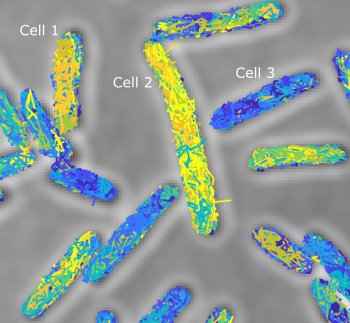
Technological advances facilitate tracking the movement of individual proteins in live bacterial cells
What causes cellular heterogeneity?
Degradation of LexA repressor leads to spontaneous activation of the SOS DNA damage response.
How do DNA-binding proteins search for their target sites in cells?
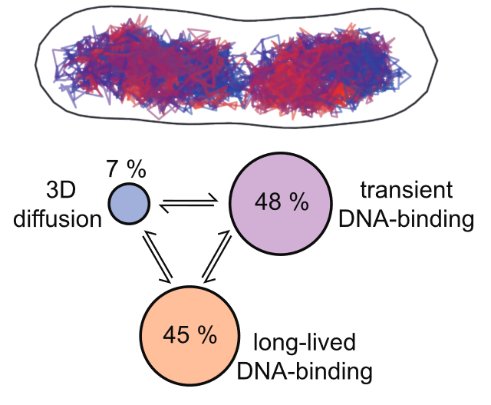
The bacterial chromosome is crowded with proteins that bind transiently to non-specific sites.
Real-time dynamics of mutagenesis
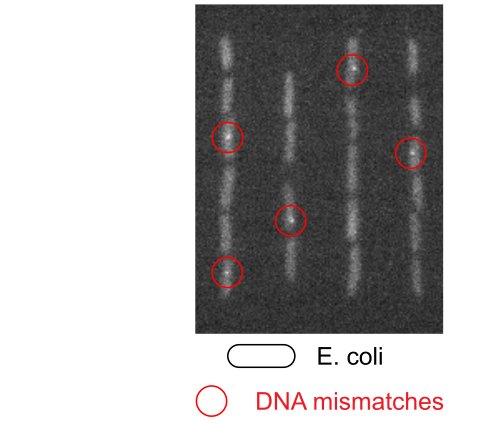
...reveal the chronology of DNA repair and damage tolerance responses in single cells.
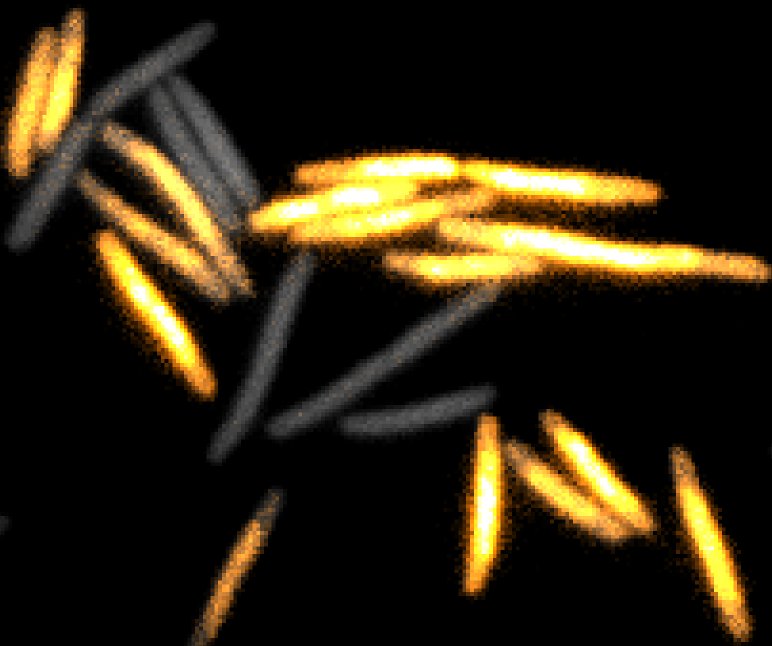
Bad luck and mutations
Stochastic DNA damage response causes cell-to-cell mutation rate variation.
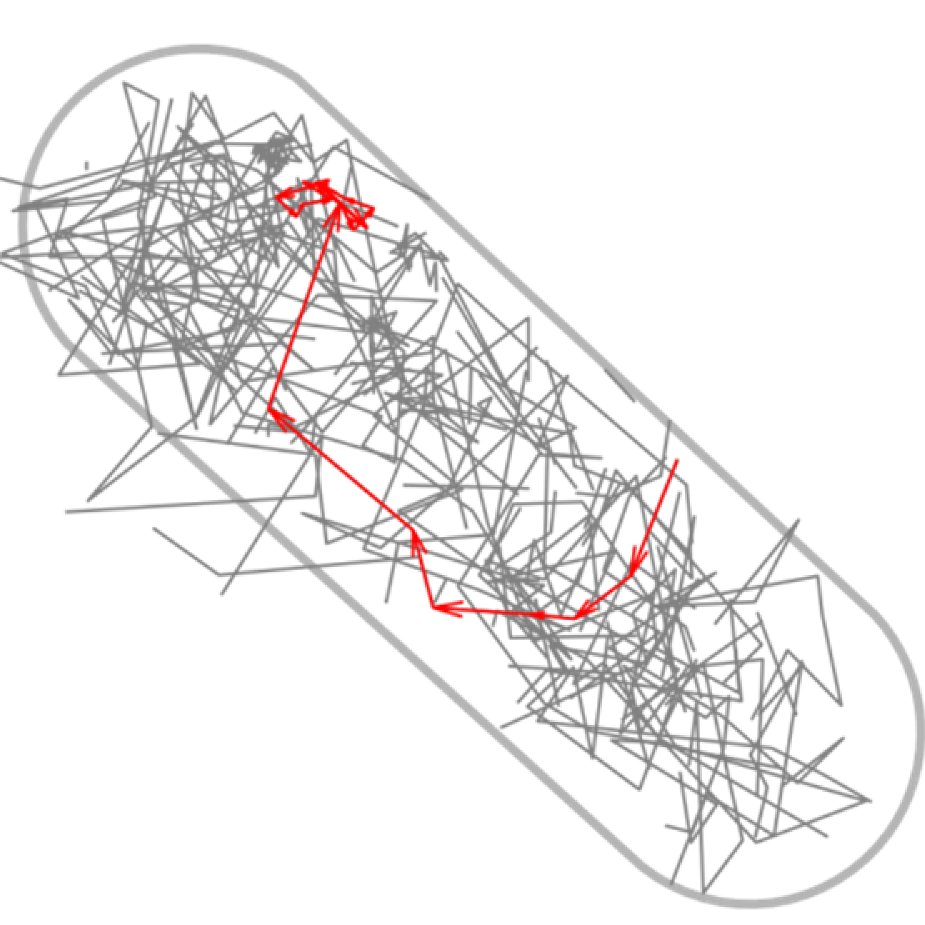
Single-molecule imaging of DNA repair in live bacteria
Using photoactivated single-molecule tracking to directly follow individual DNA repair proteins in living E. coli cells.
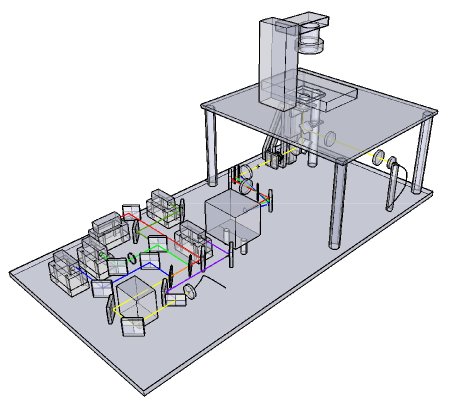
Methods for single-molecule imaging
Custom single-molecule fluorescence microscopes, imaging methods, and software.
Stress Adaptation, DNA repair, and Mutation in Bacteria
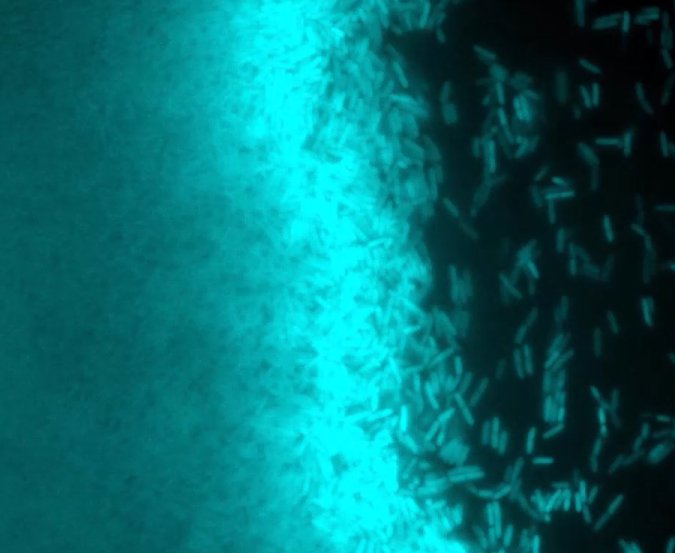
Bacteria have a remarkable capacity to thrive in adverse environments. Their adaptability relies on stress responses that provide temporary protection, for example by repairing cell damage or removing toxic chemicals. Such phenotypic adaptation offers cells a window of opportunity to evolve permanent stress resistance through genetic change. Failures to cure bacterial infections with antibiotics are often due to stress responses that promote bacterial survival as well as the evolution of drug resistance. Our lab seeks to understand how this works at the molecular level using a quantitative interdisciplinary approach. We focus on the mechanisms of DNA repair and mutagenesis, which are essential both for stress survival and for genetic change. A key aspect of our research is developing fluorescence microscopy techniques to visualise molecular events in real-time within living cells. We use super-resolution microscopy and single-molecule tracking to record the localization and movement of individual molecules such as DNA repair enzymes or transcription factors. To monitor the cellular responses to stress, we use microfluidic devices for imaging single cells. This allows us to decipher how molecular events inside cells determine long-term cell fates. Curiously, single-cell analysis revealed that bacterial phenotypes are variable even in a constant environment, a phenomenon that may be linked to stress survival. We discovered that mutation rates are also variable due to fluctuations in the expression of DNA repair proteins. These findings open fundamental questions about the mechanisms and regulation of mutagenesis, which we are now addressing using a range of novel microscopy and genetic approaches.
Uphoff Lab | Department of Biochemistry | University of Oxford
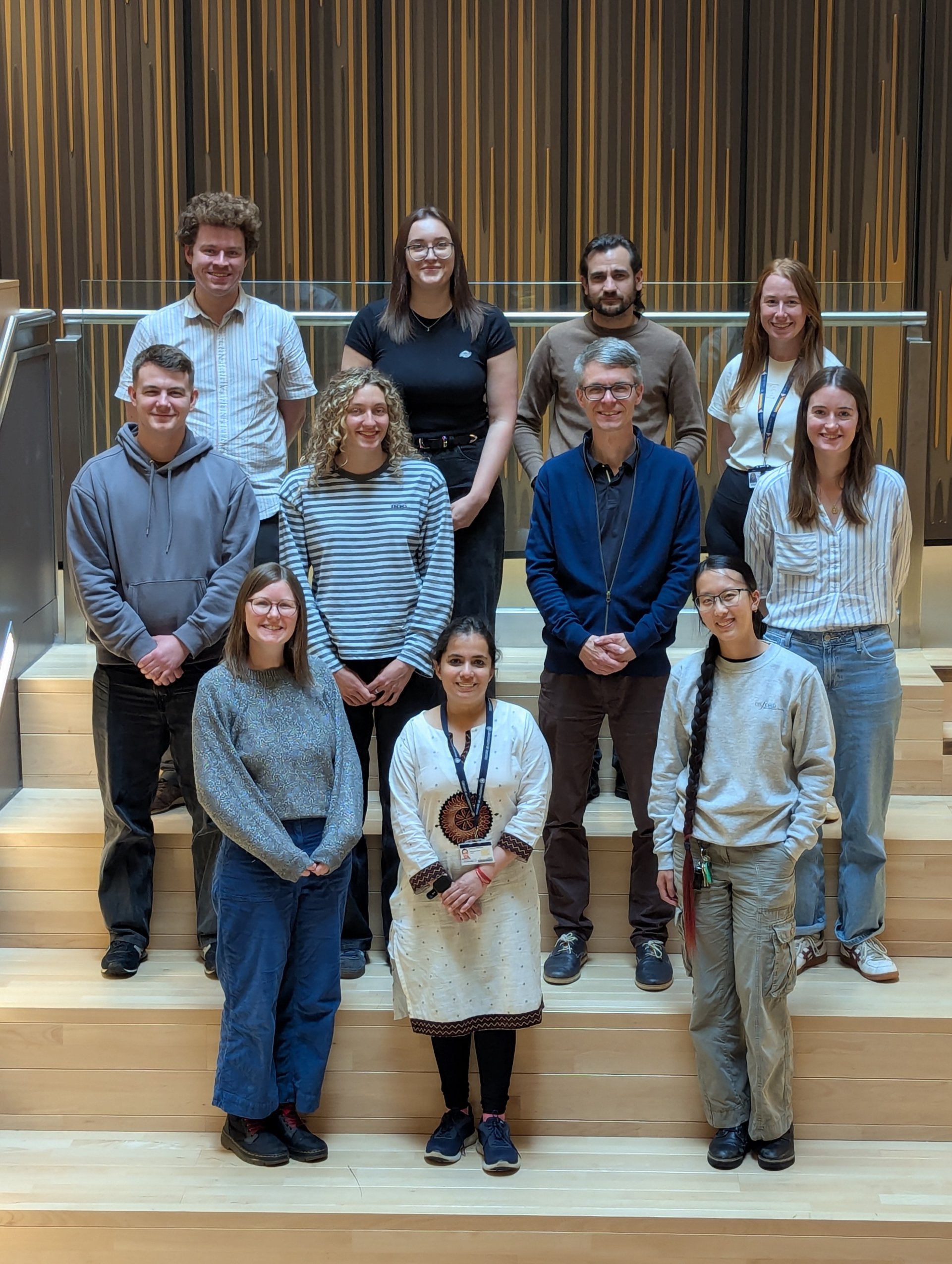
News
Congratulations Dr Marco Corrao and Dr Joseph Pollacco
July 2026
Congratulations to Marco Corrao and Joseph Pollacco, who have both successfully completed their DPhils! We wish them all the best for the next steps in their careers.
How MutH finds its target for mismatch repair
July 2026
How does the mismatch repair enzyme MutH find the right site to nick newly replicated DNA? Our new preprint shows that MutH searches for hemimethylated GATC sites near replication forks independently of mismatch detection, positioning itself ready for activation by MutS-MutL: Replication-coupled search positions MutH for strand incision in DNA mismatch repair.
SMCHD1 chromatin targeting mechanism published
June 2026
Our collaboration with the Brockdorff lab on how the chromatin regulator SMCHD1 is loaded onto specific genomic regions is now out in Nature Communications: Selective interaction of the protein SMCHD1 with specific chromatin regions is governed by the loading factor LRIF1 and SMCHD1 ATPase activity.
Lab visitors
March 2026
We welcome two visiting researchers in our lab this term. Vaishnavi Bahulekar comes from Rotterdam and Isabel de Beer from Cape Town. They will be using single-molecule imaging to study DNA mismatch repair and DNA translesion synthesis in E coli and mycobacteria.
Growth rate and antibiotic persistence
April 2026
Why do some bacteria survive antibiotic treatment even without resistance genes? In a collaboration with the Griffin and Ghoul labs, we show that high growth rates can promote the formation of dormant "persister" cells in Pseudomonas aeruginosa, now published in Proceedings of the Royal Society B.
Regulation of the oxidative stress response
November 2024
How does one transcription factor control over 20 genes to protect bacterial populations from oxidative stress? Check our new paper in Cell Systems for some answers: The master regulator OxyR orchestrates bacterial oxidative stress response genes in space and time
Daniela Taverner
April 2026
Daniela has joined our team for a rotation project and DPhil in collaboration with Georgia Isom's lab at the Dunn School of Pathology.
Imaging outer membrane biogenesis
February 2025
Our team contributed to research on how lipopolysaccharides and outer membrane proteins are distributed in growing bacteria. This work was led by the Kleanthous lab and is now published in PNAS!
Improving single-molecule tracking methodology
June 2024
Using live-cell single-molecule tracking for your experiments, but not sure which fluorescent label to use? Our new study might help!